How to Drill a Problem Spot
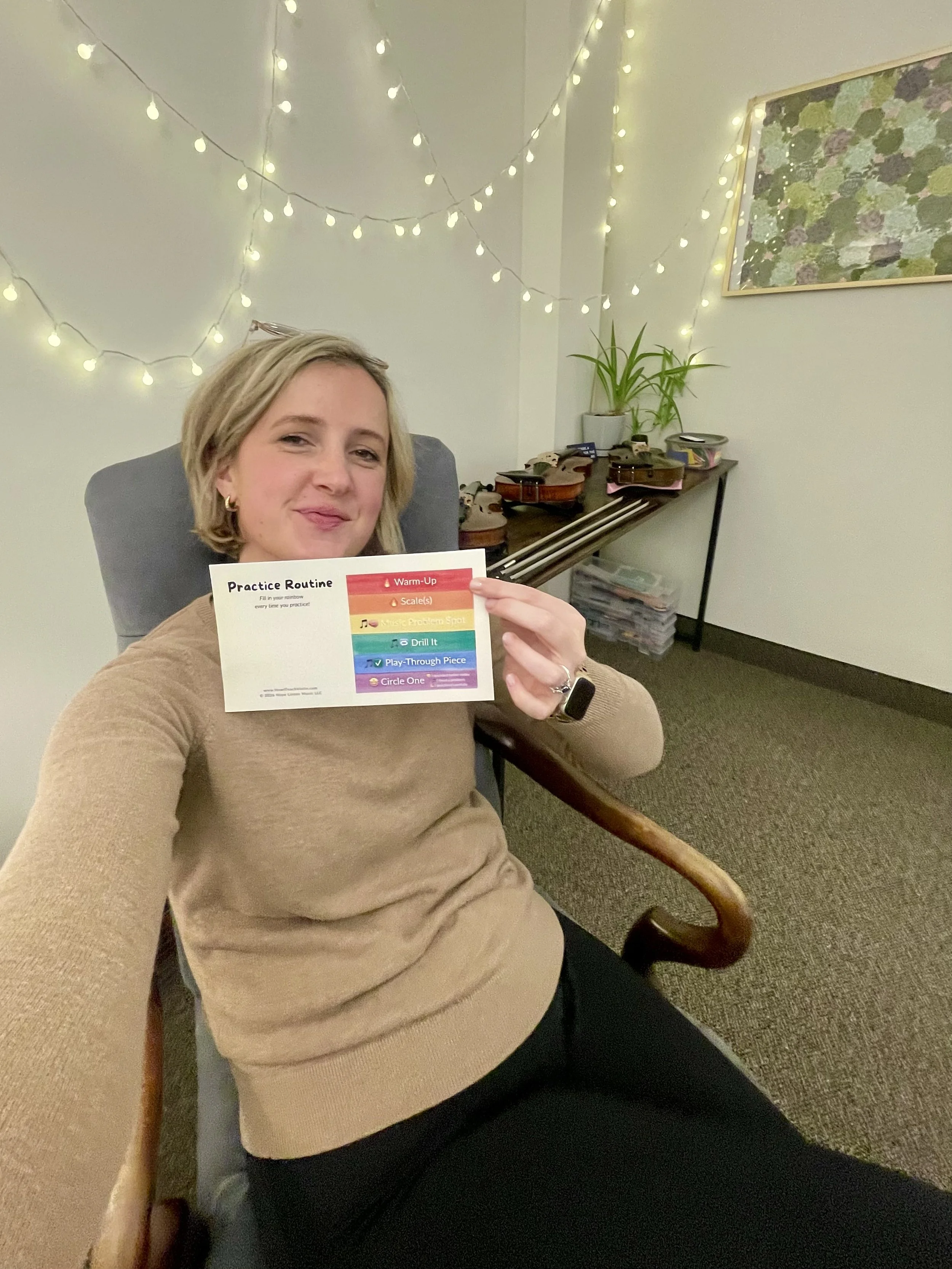
Green: The Practice Rainbow, Pt. 5
This week is our fifth in this series Have Fun, Get Better: How to Practice. We’ve talked about The Practice Rainbow, How to Warm-Up, How to Practice Scales, and How to Find a Problem Spot. Today we get into the most important thing we can do when we practice, which is to Drill a Problem Spot!
How To
There are lots of different ways you can approach problem spots. The most useful thing is probably to identify what is and isn’t working, and work on what isn’t working. Are your shifts slowing you down? Is the intonation bothering you? Are the string crossings sounding sloppy? Working on intonation when it’s actually the bow that’s the problem is a very easy mistake that lots of string players make… try not to make it yourself!
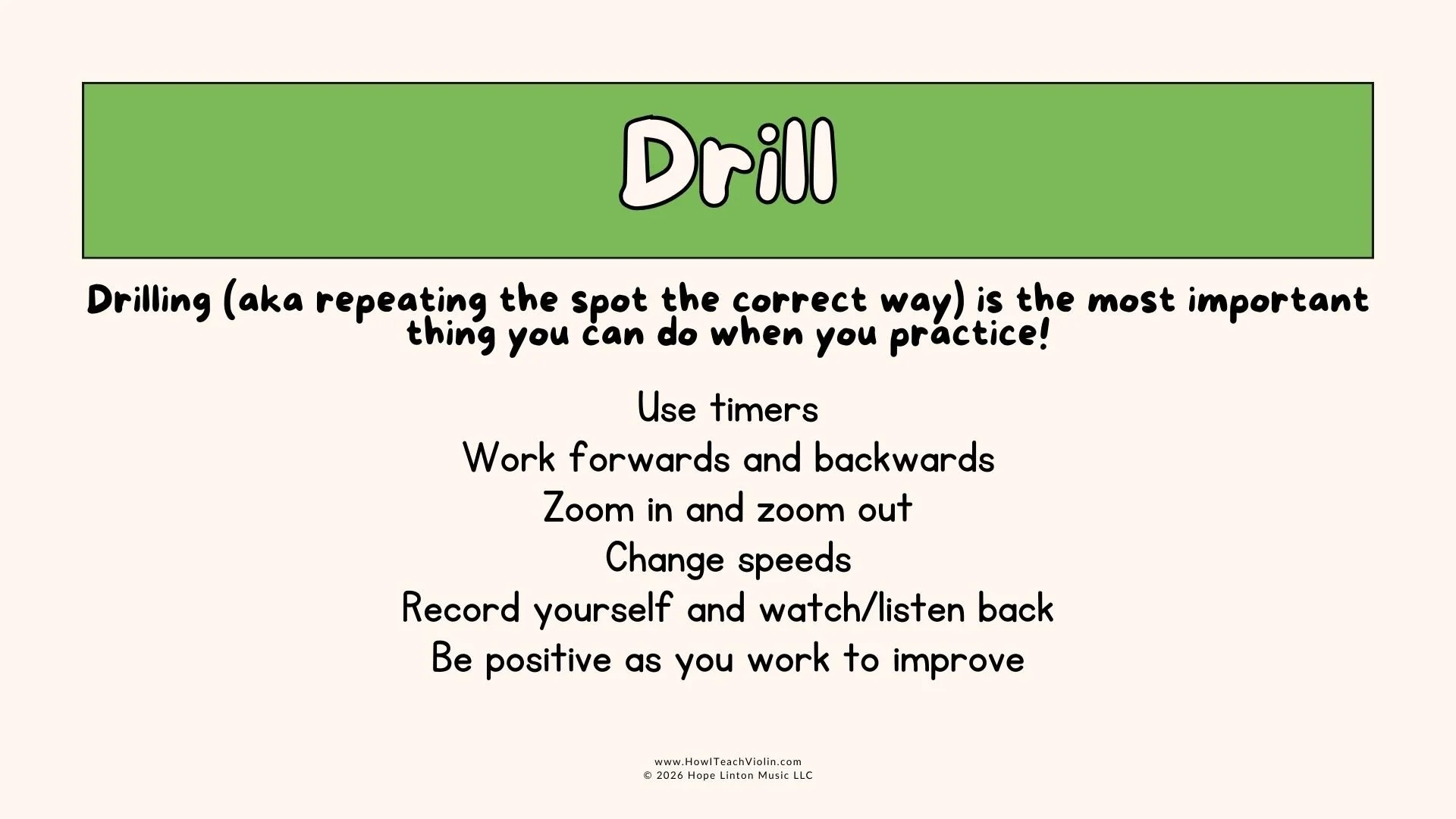
Use timers
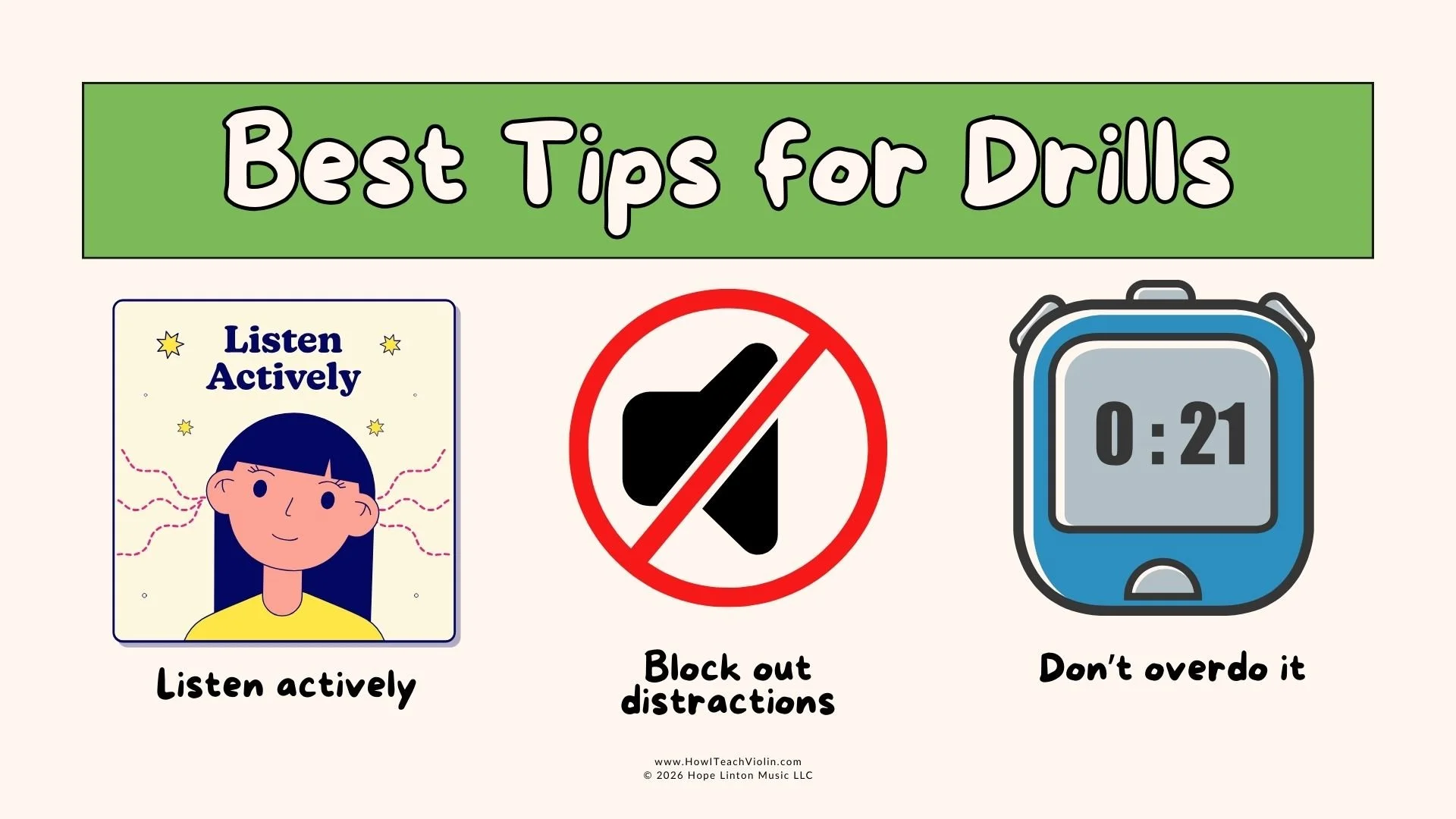
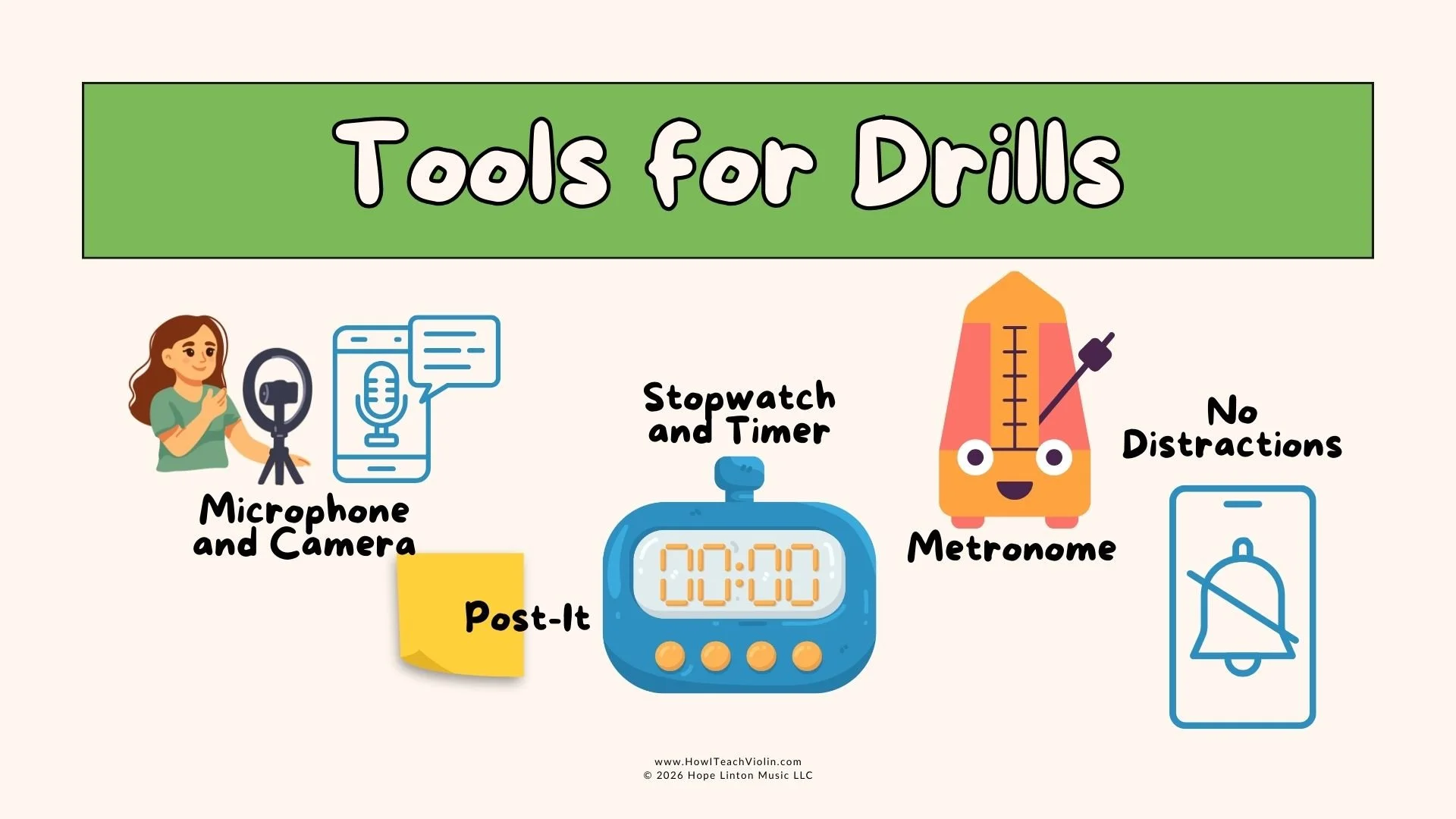
We get lost (some of us at least) when we are in the middle of an engrossing task. Set a timer to 5 minutes or less for working on a measure so you keep your brain focused and activated.
Work forwards and backwards
Approaching problems backwards is one of my favorite ways to practice. Most of us get stuck at the beginning of a problem and that colors how we see the rest of the issue. If we instead work backwards, we completely rewire our brain’s perspective and thus can be much more creative and strategic with solutions.
Zoom in and zoom out
Many students have a tendency to either play too zoomed in or too zoomed out. You have to mix it up! Practice a half measure, then plug it into the line. Does it work any better?
Change speeds
I love to go at performance speed and see what works and what doesn’t. Shifts and articulation specifically need to be informed regularly by performance tempo.
Use Post-Its
Mark spots to come back to your next practice session or cover sections that you want to memorize or want to skip for now. Using Post-Its or brackets to guide your brain towards information you want to focus on and away from information that’s less helpful.
Record yourself and watch/listen back
This one is perfect for blind spots all of us have. Just promise me that you will listen kindly back… and if that is hard for you, pretend you’re listening to a friend play. Don’t say anything to yourself that you wouldn't say to them.
Be positive as you work to improve
I can’t highlight this one enough. You can hate yourself into being a good violinist, but you cannot hate yourself into being a good happy violinist… and that’s what I want to be:)