How to Practice Scales
Orange: The Practice Rainbow, Pt. 3
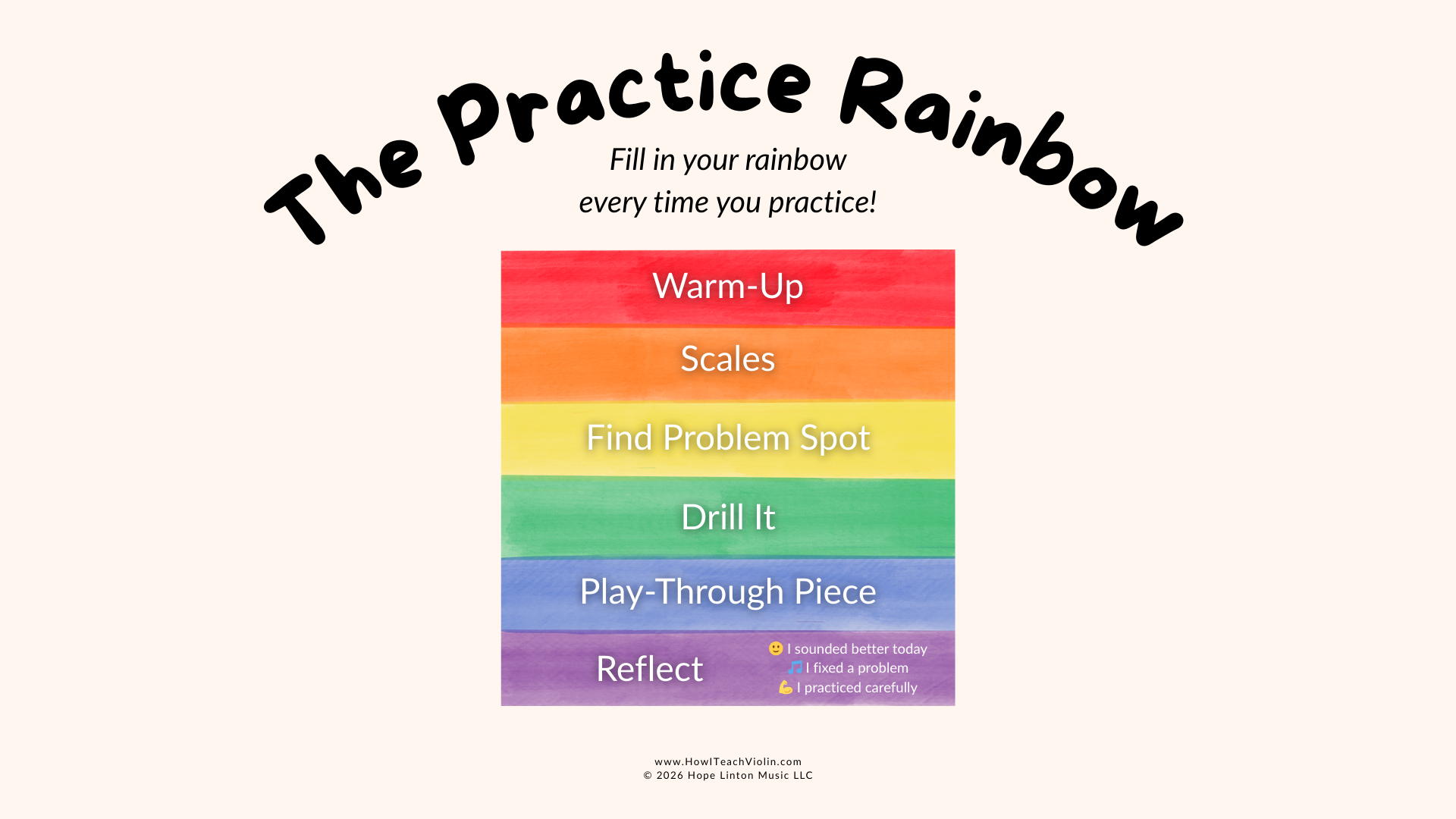
Two weeks ago we started exploring Have Fun, Get Better: How to Practice. We looked at the Practice Rainbow, an easy colorful way to organize practice and make it feel less overwhelming. Last week we looked at Red, Warm-Up, and this week we move onto Orange, our color for Scales.
Debunking Practice Myths Around Scales
I’ve heard lots of rules around scales that I don’t agree with. Here are a couple of myths:
It doesn’t count unless it’s three octaves
It doesn’t count unless it’s slow
It doesn’t count unless it’s fast
You must have perfect intonation on every note before you move on
You must get it right FIRST or it is not right
You have to crescendo
You have to play arpeggios whenever you play scales
True violinists spend at least an hour practicing scales every day
The Goal With Scales
With scales, I like to keep it simple. Here’s what I’m hoping for: 1) you play them while listening to them and 2) they connect usefully to the repertoire you’re practicing that day. That’s it!
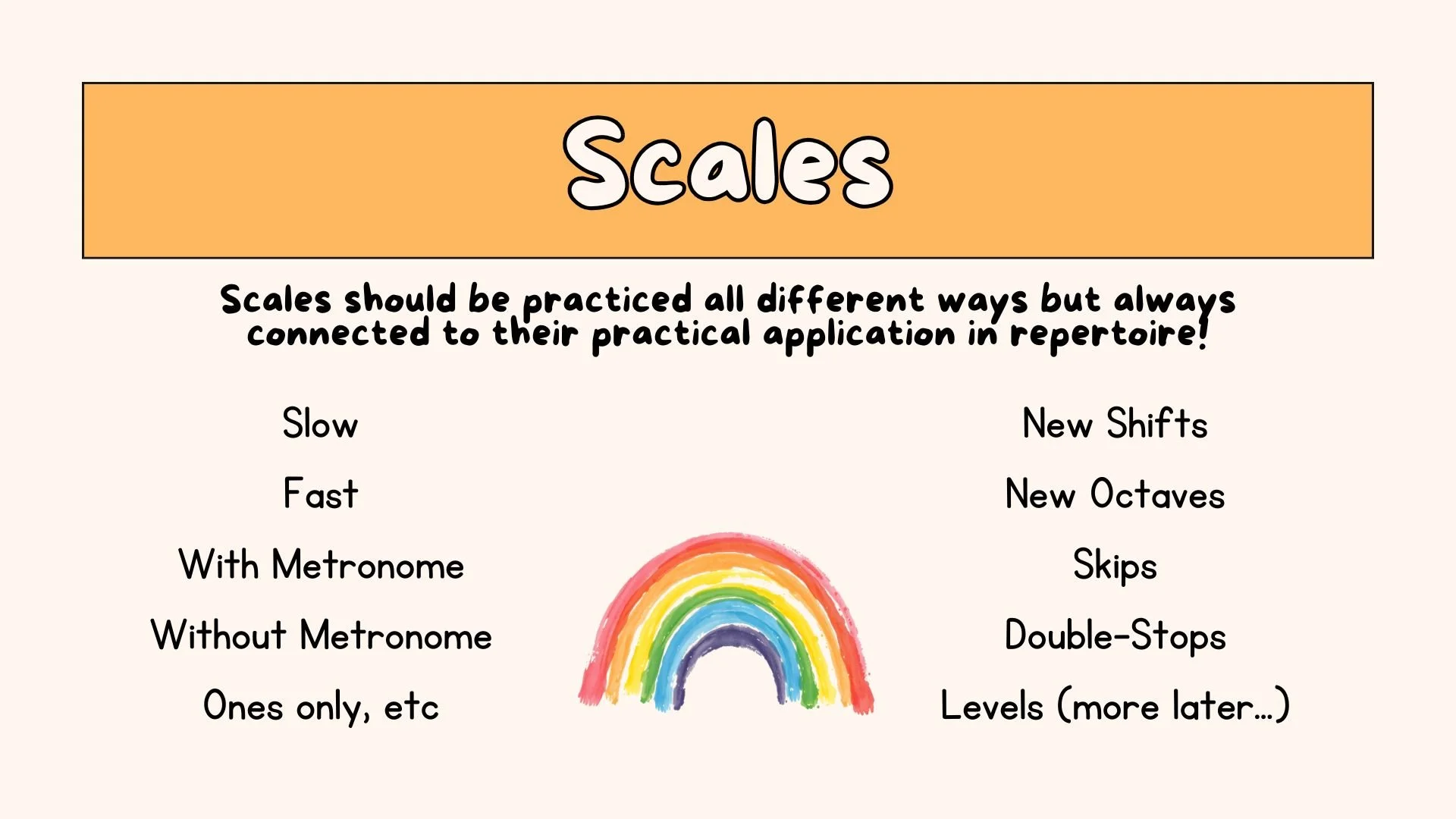
Improving them would be WONDERFUL but honestly isn’t the first goal. Taking someone who isn’t used to playing scales and then asking them to improve the thing they aren’t even used to playing would be like taking someone who’s never been to a gym before, putting them on a treadmill, then critiquing their form within the first 10 seconds of being on the treadmill. Not only would that be unhelpful, I’m guessing it would also frustrate the newbie and make them not want to go to the gym again. I’m more of the get on the treadmill, see what’s happening, improve from there kind of person.
How do I choose which scale to practice?
I like to keep this part really simple, too… Just look at the piece you’ll be focusing on in your practice session that day and identify the key signature. Two sharps? You should focus on a D Major Scale. One flat? Take a look at F Major. The simpler we can make it, especially when we are at the beginning of learning new practice habits, the more easy it will be to stick with it.
Improving Scales
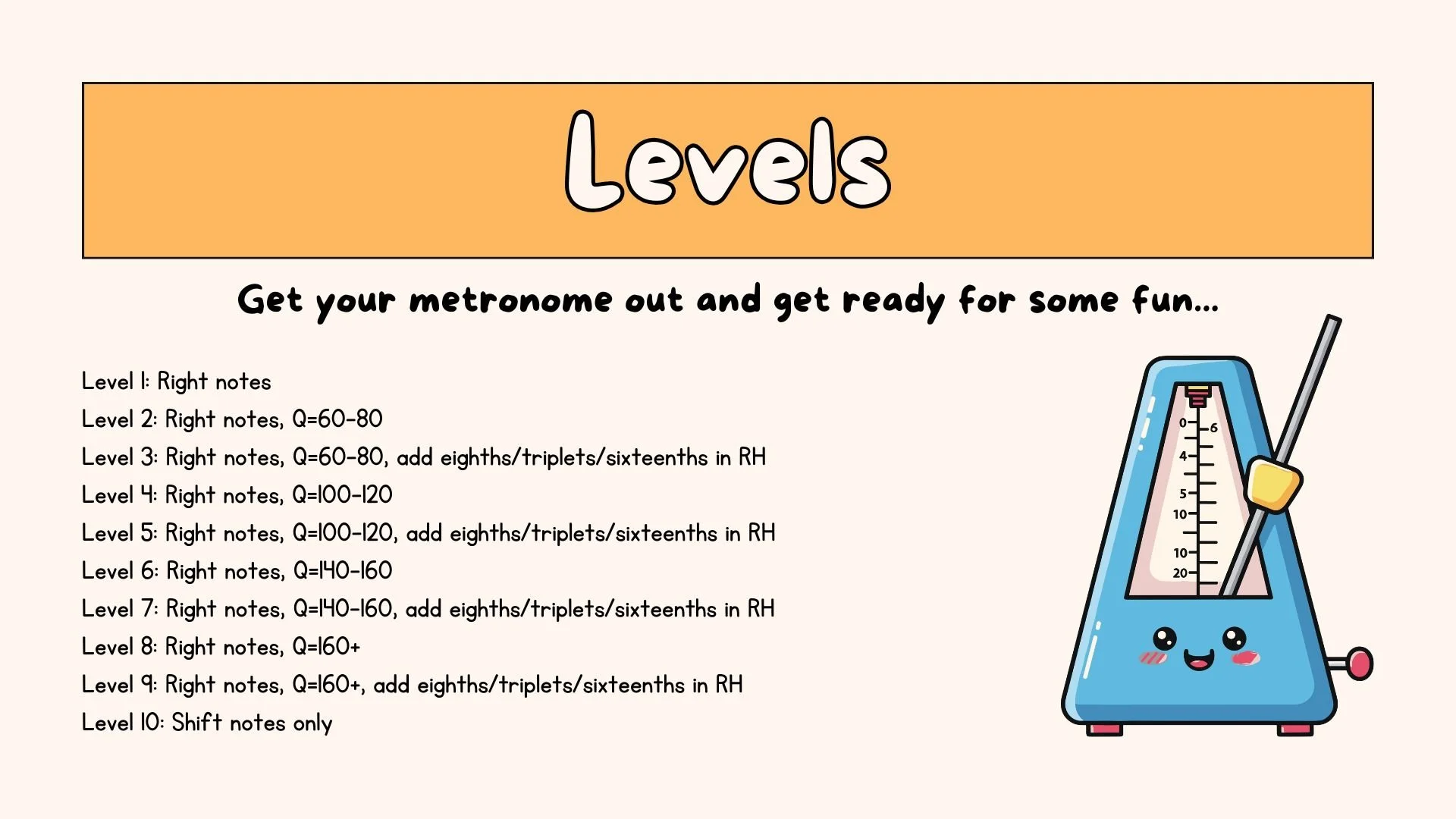
Once someone is used to the finger pattern and can play it somewhat easily (this might happen over the course of days or weeks, depending on the player and the motivation level), it makes sense for me to help the player improve their scale. This will help deepen their knowledge of the scale without it feeling overwhelming. My favorite way right now to help players improve their scales is to help them drill them. We have been doing a lot of metronome drills this month, and ALL of my students who’ve been participating can’t help but keep wanting to level up.