
How to Find a Problem Spot
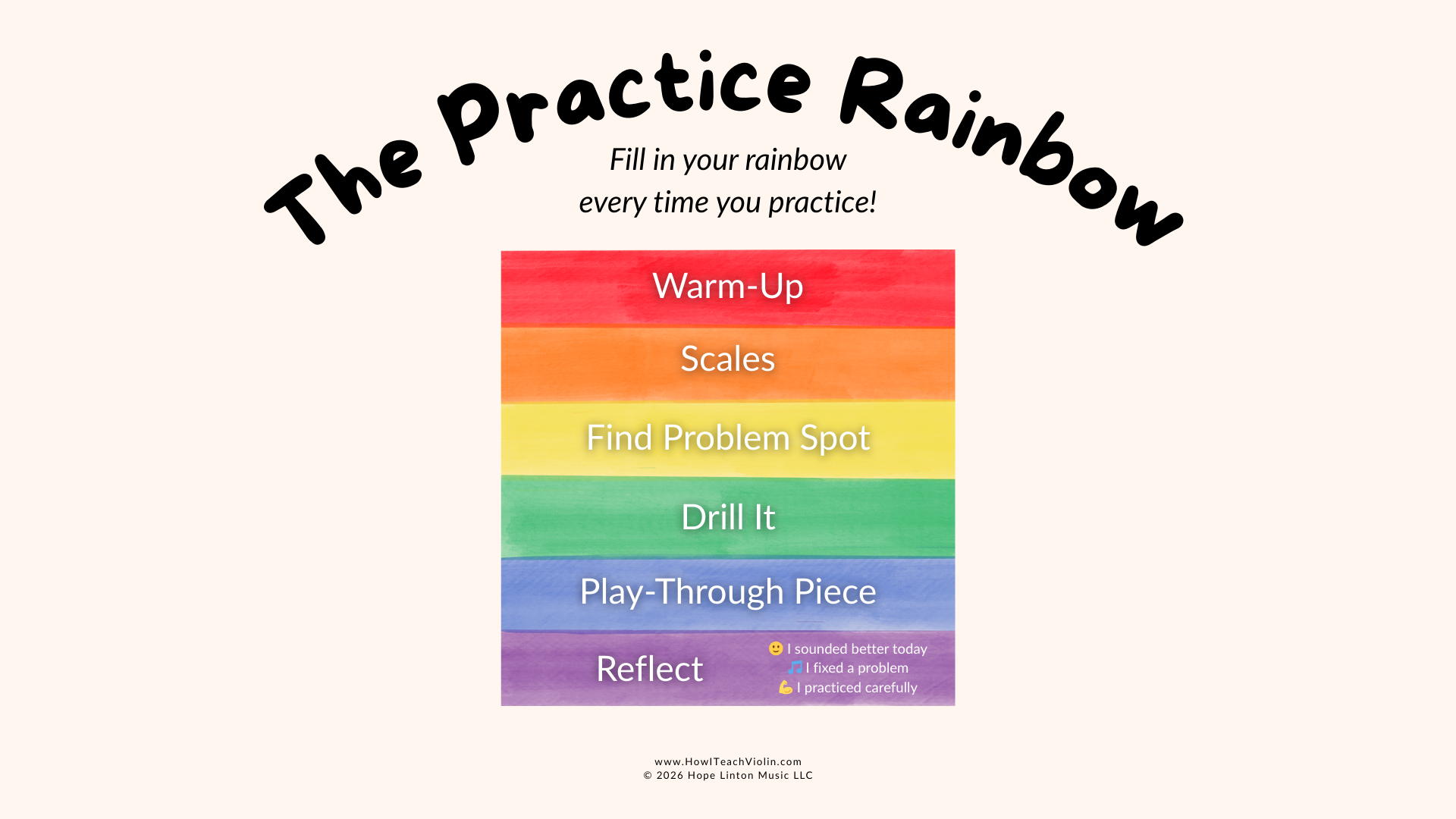
Our Practice Rainbow
Yellow: The Practice Rainbow, Pt. 4
This week is our fourth in this series Have Fun, Get Better: How to Practice. We’ve talked about The Practice Rainbow, How to Warm-Up, and How to Practice Scales. Today we get into the second most important thing we can do when we practice, which is to Find Problem Spots!
Why Problem Spots Matters
Running through pieces is not how you get better. Run-throughs can help you not get worse. They can also help you feel like you practiced. But they cannot help you get better. Problems will still be problems if all you do is run-throughs. By learning to find problem spots (and Drill Them, our topic for next week!), you learn to tackle issues head-on and actually improve what’s holding you back.
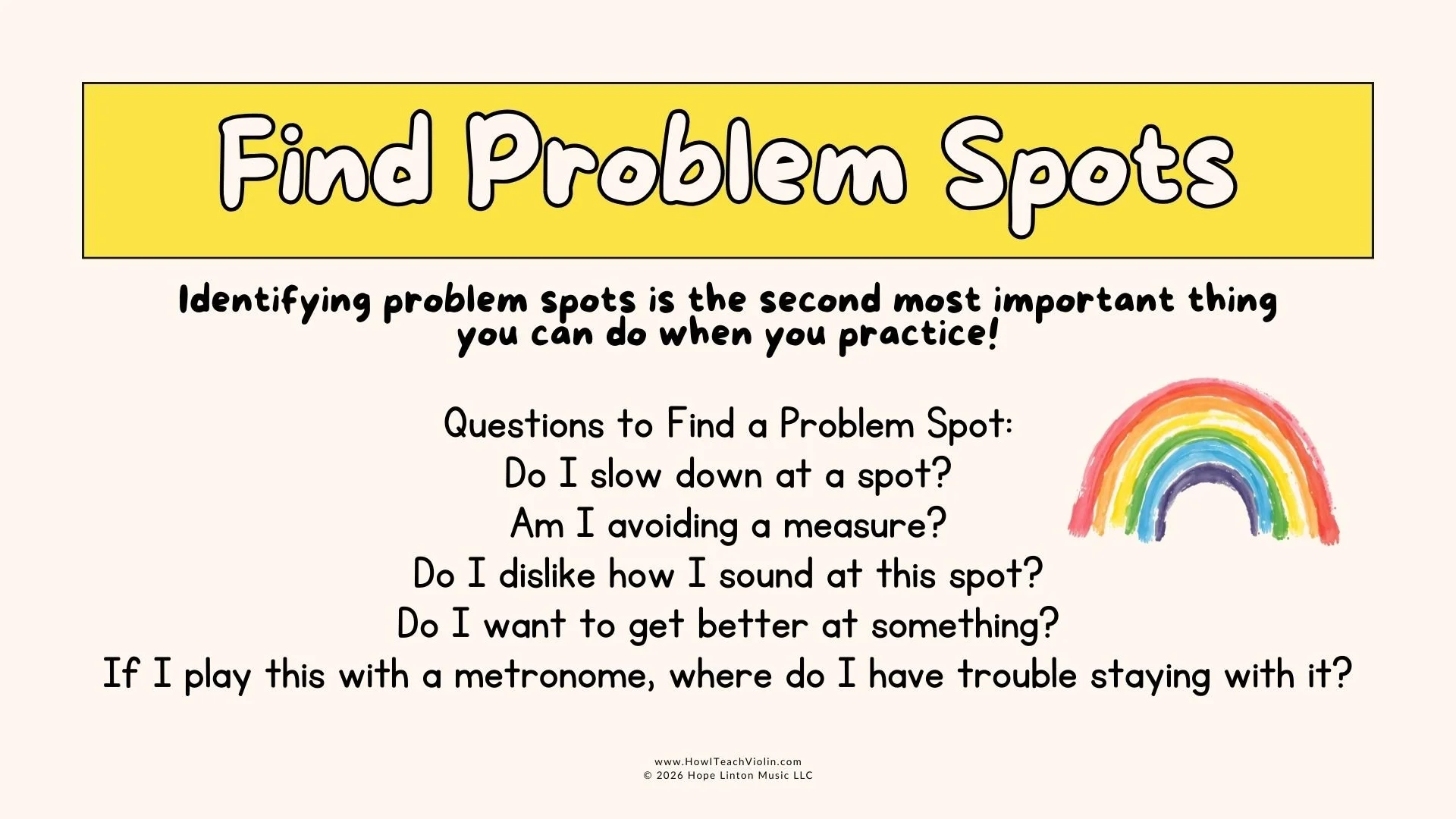
How to Find Problem Spots
Trying to find that problem spot for the first time can feel daunting, especially if you are used to just playing through your piece and calling it a day. Probably the easiest way I help students find problem spots is by noticing where they’re having trouble with maintaining the tempo or where they are unable to keep right rhythms+right notes.

Problem Spots Before Run-Throughs… it’s more important than you may realize.
A number of my students have been shocked at the order of this rainbow… especially placing problem spots before run-throughs. While practicing our rainbow in order isn’t necessary, there are two really REALLY good reasons to place problem spots first.
The first reason is that identifying a problem spot before a run-through means you actually know what’s happening for you in this piece. You have piece awareness, skill awareness, and self awareness. If you don’t have these awarenesses when you are practicing, I think you are likely having trouble improving.
The second reason identifying a problem spot pre-run-through is great is because it focuses your best practice energy on problem solving. See below.
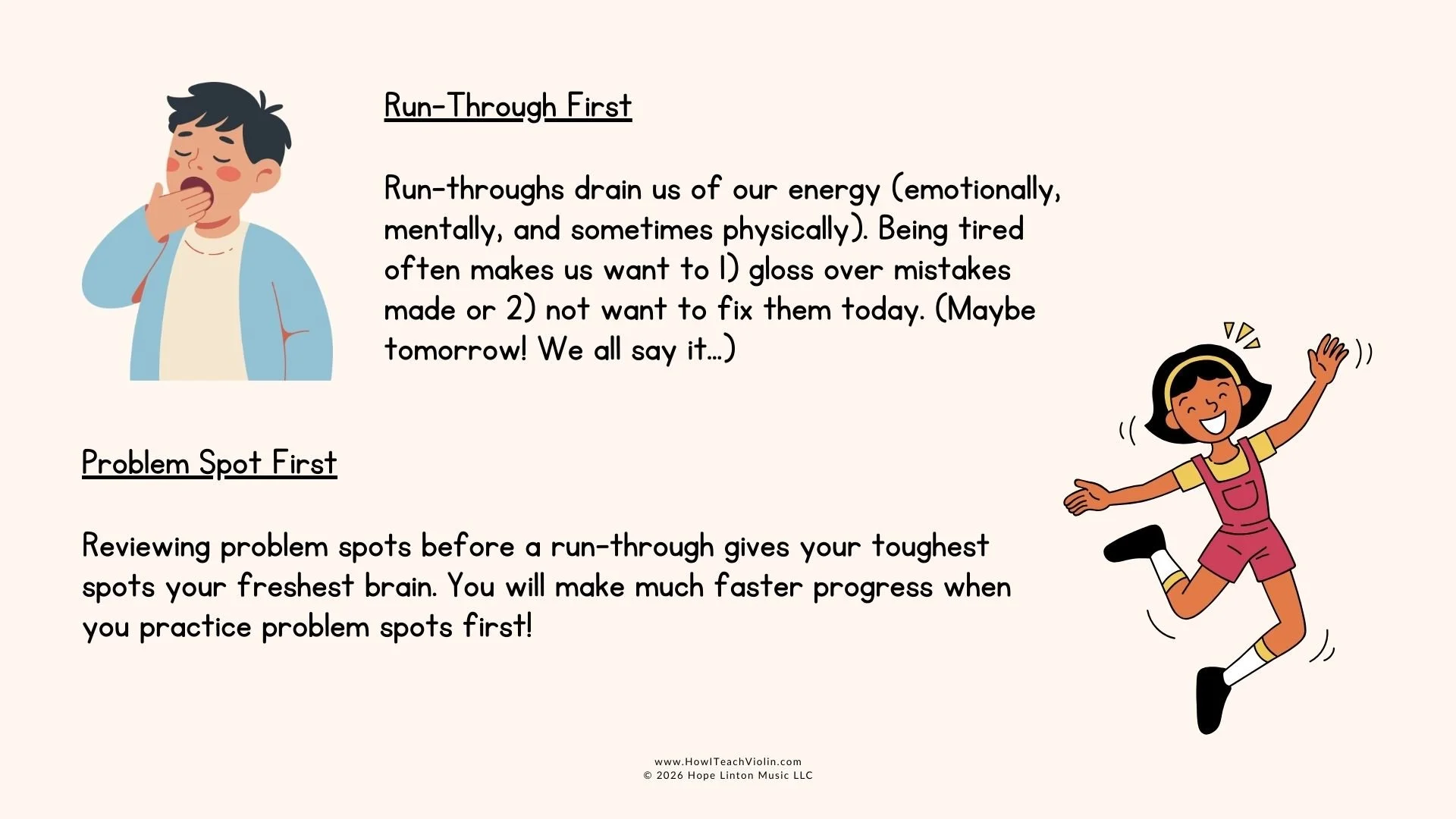
Fresh brain = Better problem solving = More improving = Exciting results
If you need some easy ways to identify problem spots, check out the list below. I love using colorful, tiny transparent post-its for my students. The best time to identify problem spots is before or after a run-through. The best time to practice them is before!
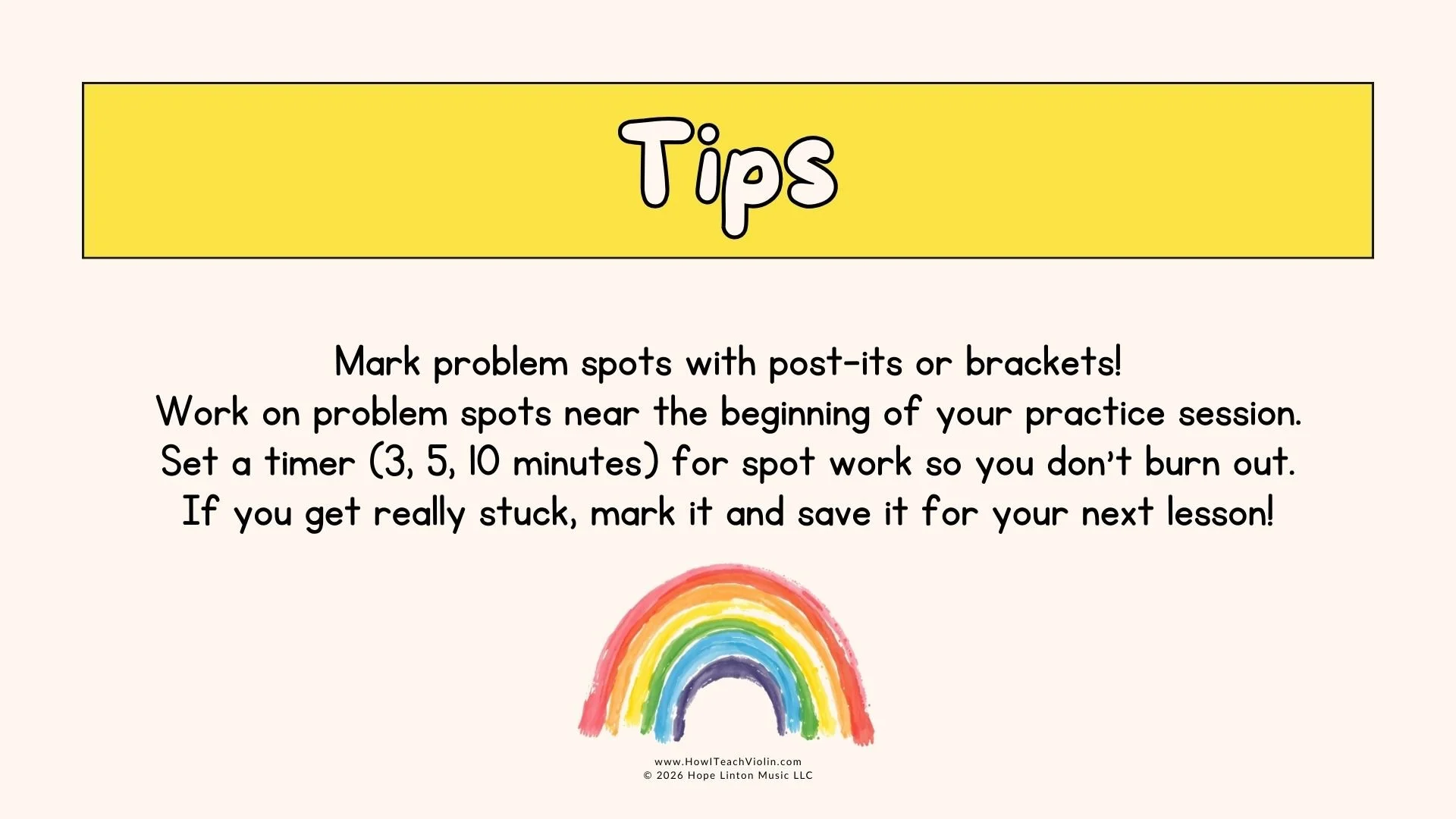
Use simple visuals like post-its and simple tools like timers!
While I’m sure lots of this feels complicated, just try it! Give it even five minutes. You will notice a difference in the quality of your practice session which quickly translates to the quality of your playing. A little intentionality here can translate to FANTASTIC results.
Next week we will explore how we actually work on problem sections with our next color, Green: Drill It!
